
SPF 50 Vs Moisturizing Cream With SPF: Do You Really Need Both?

74 Views
When it comes to daily skincare, sun protection is non-negotiable. But many people often wonder, if you’re already using a moisturizing cream with SPF, do you still need a separate SPF 50 sunscreen? Or is one enough? Let’s break it down and understand the difference.
What Does SPF 50 Actually Mean?
SPF stands for Sun Protection Factor. SPF 50 means the product protects your skin from about 98% of UVB rays, which are primarily responsible for sunburn and contribute to skin damage, pigmentation, and premature ageing.A dedicated sunscreen with SPF 50 is usually formulated to provide:
- Broad-spectrum protection (UVA + UVB)
- Higher sun defence
- Longer outdoor wear
- Sweat and water resistance (in some formulas)
It’s designed with sun protection as the primary function.
What Is A Moisturizing Cream With SPF?
A moisturizing cream with SPF is a multitasking product. It hydrates the skin while offering some degree of sun protection. These are ideal for people who prefer a simplified routine and want light, everyday protection.However, the SPF in moisturizers is often:
- Lower or moderate (SPF 15-30, sometimes 50)
- Designed for short sun exposure
- Not always applied in sufficient quantity
Since moisturizers are mainly for hydration, the SPF component may not provide the same level of coverage as a dedicated sunscreen, especially during prolonged sun exposure.
Why Quantity Matters?
Here’s something many people overlook: sunscreen effectiveness depends on how much you apply.
To get full SPF 50 protection, you need approximately two finger-lengths of product for the face and neck. When using a moisturizing cream with SPF, most people apply less than the required amount because they treat it like a regular cream.As a result, the actual protection you get may be much lower than what’s mentioned on the label.
Do You Really Need Both?
The answer depends on your lifestyle.
. If You Spend Most of Your Time Indoors
If you’re indoors with minimal direct sun exposure, the Garnier moisturizing cream with SPF may be sufficient for daily protection, especially if you sit near windows or step out briefly. However, reapplication is still important if exposed to sunlight for extended periods.
. If You Spend Time Outdoors
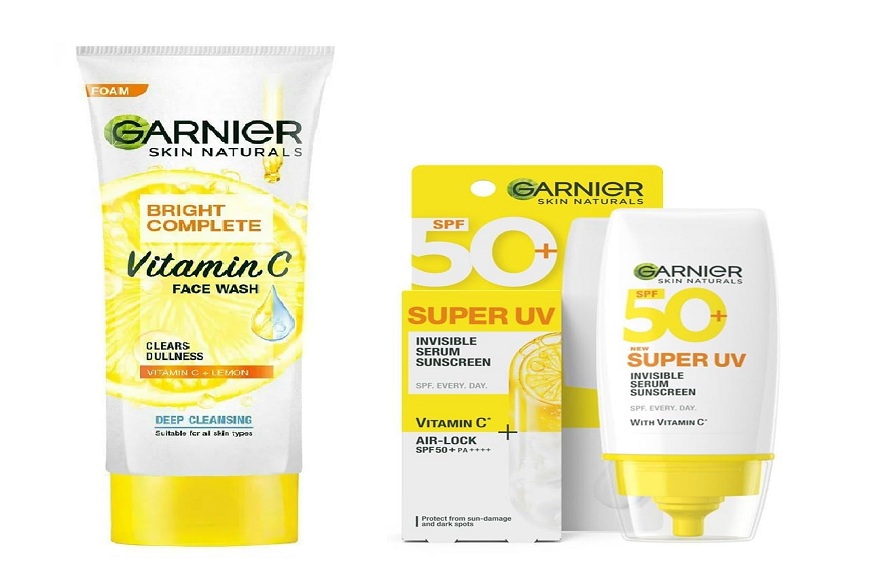
If you commute daily, work outdoors, travel, or exercise outside, the Garnier sunscreen with SPF 50 is highly recommended, even if your moisturizer contains SPF.
In such cases, you can:
Step 1: Apply your regular moisturizer first.
Step 2: Layer a proper SPF 50 sunscreen on top.
Step 3: Reapply every 2-3 hours.
This ensures your skin stays hydrated and well-protected.
What About Oily Or Acne-Prone Skin?
Many people avoid layering because they fear greasiness. But modern sunscreen formulas are lightweight, non-comedogenic, and suitable for oily skin. Using a gel-based SPF 50 sunscreen over a light moisturizing cream can actually prevent sun-induced pigmentation and post-acne dark spots from worsening.
A moisturizing cream with SPF is convenient and helpful for basic, everyday protection. But it may not always replace a dedicated SPF 50 sunscreen, especially during prolonged sun exposure.
Think of it this way:
- Moisturizer with SPF = Daily baseline protection
- SPF 50 sunscreen = Strong, reliable sun shield
For optimal skin health, especially if you’re concerned about pigmentation, ageing, or tanning, using both can be a smart move. Remember, sun protection isn’t just for summer; it’s a daily essential.